

AQF Level 5 Arborist: When Do You Need One in Sydney?
Updated: Oct 7
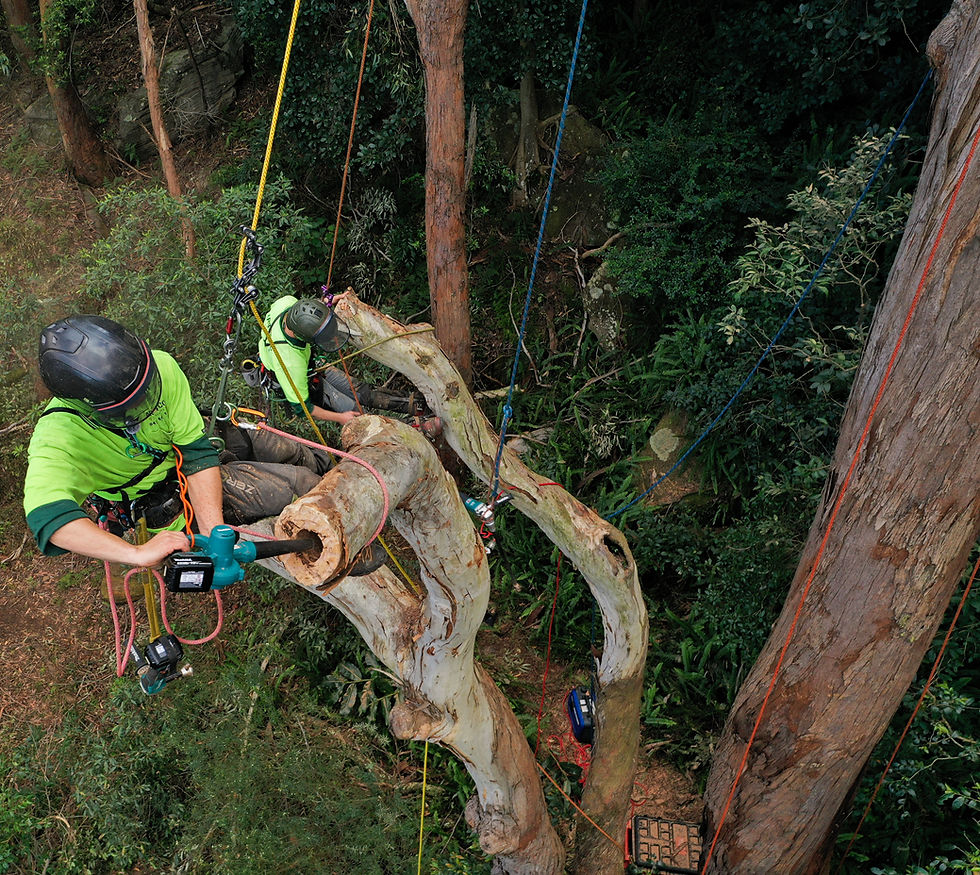
An AQF Level 5 arborist holds a diploma-level qualification in arboriculture, with training focused on tree assessment, management advice and reporting. For Sydney homeowners, that expertise becomes particularly useful when a tree raises safety concerns or council needs a formal report.
Usually, the term first appears in an email.
You’ve asked about removing a tree, or your designer has submitted plans for an extension, and someone replies asking for a report from a suitably qualified consulting arborist.
Fair enough. But what does that qualification actually mean, and do you need it just to have a few branches pruned?
There’s a distinction worth understanding before you book anything.
What Does the Qualification Mean?
AQF stands for Australian Qualifications Framework. Level 5 is the diploma level; in this field, the relevant qualification is a Diploma of Arboriculture.
The national qualification describes work undertaken by consulting arborists and tree managers, including assessing trees and preparing reports about their health and associated risks. You can find the qualification on the Australian Government’s training register.
In practical terms, this is about interpreting what’s happening with a tree and explaining what should happen next.
A tree might have a full canopy but a structural defect that needs investigation. Another might look rather shabby after a difficult season without needing removal at all. The assessment brings those details together instead of relying on appearance alone.
It’s also worth knowing that “Level 5” describes a qualification, not five years of experience. Relevant experience still matters, particularly when the job involves established trees, construction or a complicated site.
Is That Different From the Arborist Who Prunes Trees?
Yes, although one person may hold qualifications and experience in both areas.
Practical arboriculture commonly involves climbing, pruning, rigging and removing trees. Consulting work focuses more heavily on assessment, advice, documentation and tree management decisions.
Neither role makes the other unnecessary. Safely dismantling a tree over a tiled roof requires considerable practical skill. Assessing whether that tree needs removal, and documenting the reasons for council, is a different task.
For straightforward maintenance, you may need a suitably qualified tree-work crew rather than a detailed consulting report. Where formal evidence is required, check the report author’s qualifications before booking.
A quote for removal and an arborist report are not interchangeable.
When Might a Sydney Homeowner Need a Report?
The reason for the report determines what it needs to cover. A general condition assessment won’t necessarily answer the questions raised by a proposed swimming pool or house extension.
When council asks for supporting evidence
Council may need more than photographs and a description of your concerns before deciding a tree application.
Requirements vary across Sydney. For example, North Sydney Council’s guidance for trees in development applications specifies a consulting arborist with a minimum AQF Level 5 Diploma of Arboriculture or equivalent.
Check the requirements for your particular application. Don’t assume advice given to a friend in another council area applies to your property.
When building work could affect trees
A new driveway, retaining wall or extension can affect a tree without touching its trunk.
Excavation may cut roots. Machinery can compact soil. Changes to ground levels and drainage can alter growing conditions. Neighbouring trees may also need consideration where roots extend into the work area.
Getting advice while the design is still flexible gives you more room to respond. Once the builder is ready to start, even a modest layout change becomes inconvenient.
When a tree’s condition is worrying you
A new lean, damaged branch attachment or change around the base deserves attention. An assessment can help establish whether monitoring, pruning, further investigation or removal is appropriate.
If there is an immediate danger, keep people away from the affected area and seek urgent assistance. Don’t walk underneath a damaged branch to get a better photograph.
What Does the Arborist Actually Look At?
The tree is assessed in its surroundings, not as an isolated object.
On the North Shore, that might mean a large established tree beside an older house, with a retaining wall nearby and limited access down the side. On the Northern Beaches, coastal exposure, sloping ground and previous landscaping may all be relevant.
Depending on the purpose of the assessment, the arborist may consider:
Species, approximate size and overall condition
Canopy health, deadwood and branch structure
Visible wounds, cavities or signs of decay
Root-zone conditions and evidence of disturbance
Nearby buildings, pathways and areas people regularly use
Proposed construction and its potential impacts
A visual inspection also has limits. It cannot reveal every internal defect or every root below ground. A sound report should explain those limitations and identify whether further investigation is needed.
That’s useful honesty, rather than a weakness in the assessment.
A Report Is Not a Promise of Removal Approval
This catches people out.
Booking an AQF Level 5 arborist does not mean you are purchasing a recommendation to remove the tree. You’re paying for an assessment and defensible advice.
The findings might support removal. They might instead recommend selective pruning, monitoring or changes to a building design. A healthy tree that drops leaves into the pool can be frustrating, but inconvenience and unacceptable risk are different things.
Where approval is required, the relevant authority makes the decision. A report provides evidence; it does not replace permission.
Before You Book, Send Through the Paperwork
The council email. The proposed plans. Any previous report you’ve got tucked away somewhere.
Even if you’re not sure which document matters, supplying it early helps clarify the scope. Ask whether the quote covers a site inspection, a written report and responses to follow-up questions. If additional testing might be needed, establish how that would be handled.
It saves the awkward situation where you receive a perfectly reasonable assessment that doesn’t address what your planner actually requested.
Arbor Co’s arborist reporting services in Sydney assess tree condition, health and risk to help property owners make informed decisions. Share your concerns and any council requirements when enquiring so the assessment can be matched to the job.
You don’t need to arrive knowing what’s wrong with the tree. That’s the point of getting it assessed.


Comments